
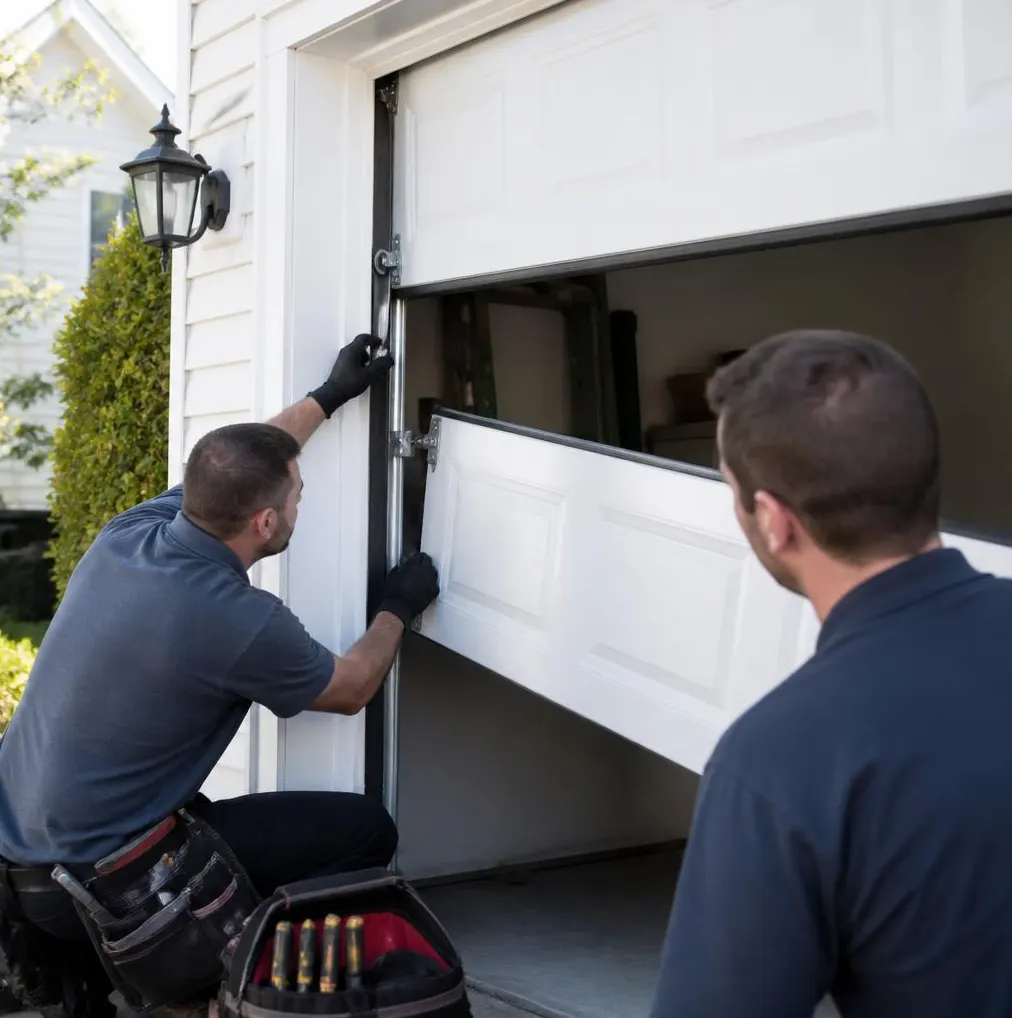
Here's the mistake almost everyone makes: the old door finally gives out, so you jump straight to browsing styles and colors online, maybe even call in an order, before checking whether your neighborhood or county cares what goes up in its place. It's tempting because picking a door feels like progress. It's the fun part. Checking paperwork feels like a delay. But that order is backwards, and it's the thing spouses usually end up arguing about halfway through a project — one person wants to move fast, the other remembers the HOA newsletter mentioning "architectural approval" six months ago.
Here's the plain-language version of what actually matters, in the order it should happen.
HOA Rules Come First, Not Last
If your property is in a homeowners association, the HOA almost always has some say in exterior changes, and garage doors are a classic target because they're a big, visible chunk of the front of the house. Common things HOAs restrict:
- Color — many require doors to match the house trim or stick to an approved palette.
- Material and style — some associations don't allow a switch from raised-panel to flush modern styles, or from steel to a different material.
- Window inserts — decorative windows are sometimes required, sometimes banned, depending on the community's look.
- Approval timing — most HOAs want a submission and sign-off before installation, not a photo afterward.
The fix is simple and takes fifteen minutes: pull your HOA's architectural guidelines or call whoever handles approvals, and ask specifically about garage doors. Do this before you fall in love with a color swatch.
Permits: Usually Not About the Door Itself
A lot of homeowners assume a permit is required just to swap one garage door for another, and get frustrated when they can't find a clear answer. The truth is more nuanced. A straightforward door replacement — same size opening, same general structure — often doesn't need a separate permit in many jurisdictions. But permits commonly get triggered by:
- Changing the size or framing of the opening.
- Structural work tied to the door, like header modifications.
- Electrical work for a new opener circuit, especially if you're adding a dedicated outlet or upgrading wiring.
- Any work bundled into a larger renovation, like a garage conversion.
The honest answer is: it depends on your local building department's current rules, and those rules can change. Don't guess, and don't rely on what the neighbor did three years ago. A quick call to the Hoke County building or inspections office, describing exactly what you're doing, settles it in a few minutes and avoids a stop-work notice later.
Wind-Load Codes Matter More Here Than People Think
This is the one that surprises people, because it sounds like a coastal-only concern. It isn't, not entirely. This part of North Carolina sits inland, but it still gets the remnants of hurricanes moving through, along with heavy rain and strong gusts that can hammer a garage door — often the largest unsupported opening in a house. Garage doors carry a wind-load rating, essentially a measure of how much pressure the door and its track can withstand before buckling or blowing in.
A few practical points:
- Builders and some local codes specify minimum wind-load ratings for garage doors in areas that experience tropical system remnants, even well inland.
- A reinforced door with heavier-gauge steel and a bracing kit costs more up front but holds up far better during a bad storm season.
- If your current door has flexed or bowed visibly during a windy storm, that's a sign the existing door or track may be under-built for the pressure it's getting, not just old.
When you're replacing a door anyway, this is the moment to ask your installer what wind-load rating the new door carries and whether it's appropriate for what this area actually sees — not just what's cheapest on the shelf.
Putting It in the Right Order
- Check HOA architectural rules first, before selecting a style or color.
- Call the local building/inspections office to confirm whether your specific project needs a permit.
- Ask about wind-load rating when comparing doors, especially given the storm remnants and heavy rain this region gets.
- Get written approval or a permit number before installation day, not after.
Skipping steps doesn't usually blow up immediately. It blows up later — an HOA letter demanding you repaint or swap the door, or a county inspector flagging unpermitted electrical work during an unrelated inspection, or a door that fails in exactly the kind of wind event it should have been rated for.
When to Call Raeford Garage Door
Once you've got the HOA and permit questions answered, that's exactly when to bring in Raeford Garage Door for Garage Door Installation. We can talk through wind-load options for your specific property, help you pick a style that satisfies HOA material and color requirements, and handle the install cleanly so there's nothing left for an inspector to flag. If you're not sure whether your existing door even needs replacing yet, our Garage Door Maintenance service can tell you honestly whether a repair buys you another season or whether it's time to start the paperwork.
If you're in Raeford, Fayetteville, Southern Pines, Aberdeen, Pinehurst, Red Springs, Lumber Bridge, or Rockfish and you're staring down a garage door replacement, call Raeford Garage Door before you order anything. We'll help you get the order of operations right the first time.